Chasing a client for money is uncomfortable, but most late payments are not deliberate. Invoices get buried, approvals stall, and payment details get lost. A clear, friendly reminder solves most of these cases. This guide gives you a follow-up schedule and four late payment reminder email templates you can adapt in a minute.
Why invoices get paid late
Before you write anything, remember the usual causes. The invoice may have gone to the wrong person or a spam folder. It may be waiting on an internal approval. The client may not have your payment details, or the invoice may be missing a purchase order number they need. Treating the first reminder as a helpful nudge, not an accusation, keeps the relationship intact and still gets you paid.
A simple follow-up schedule
- A few days before the due date: a short courtesy note, useful for new clients or large invoices.
- On the due date: a polite "payment is due today" message with the invoice attached again.
- About a week after: a firmer reminder that states the amount overdue and asks for a payment date.
- Two to three weeks after: a final notice that explains what happens next, such as pausing work or applying agreed late fees.
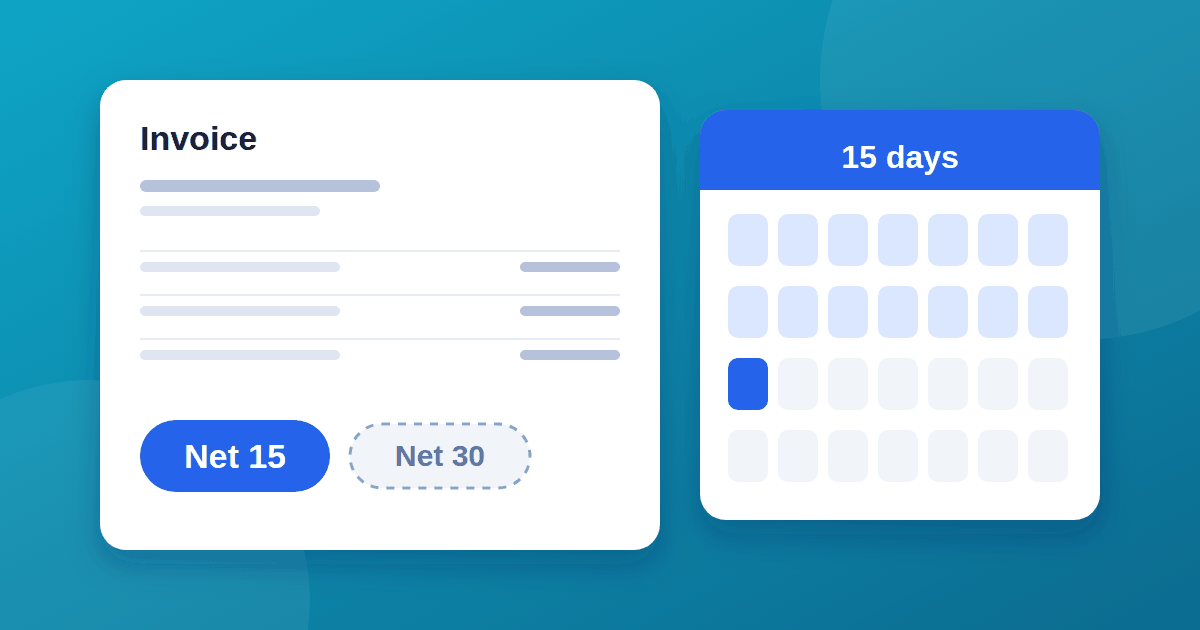
Adjust the timing to your payment terms. If you are deciding between short and long terms, see our comparison of Net 15 vs Net 30.
Template 1: Friendly pre-due reminder
Subject: Invoice INV-2026-014 due on October 31

Hi [Name],

Just a quick note that invoice INV-2026-014 for $2,300.00 is due on
October 31. I have attached a copy for convenience.

Payment details are at the bottom of the invoice. Let me know if you
need anything from me to process it.

Thanks,
[Your name]
Template 2: Due-date reminder
Subject: Payment due today: invoice INV-2026-014

Hi [Name],

A friendly reminder that invoice INV-2026-014 for $2,300.00 is due
today. The invoice is attached again, and you can pay by bank
transfer or the payment link on the invoice.

If it has already been sent, thank you, and please ignore this note.

Best,
[Your name]
Template 3: Overdue follow-up
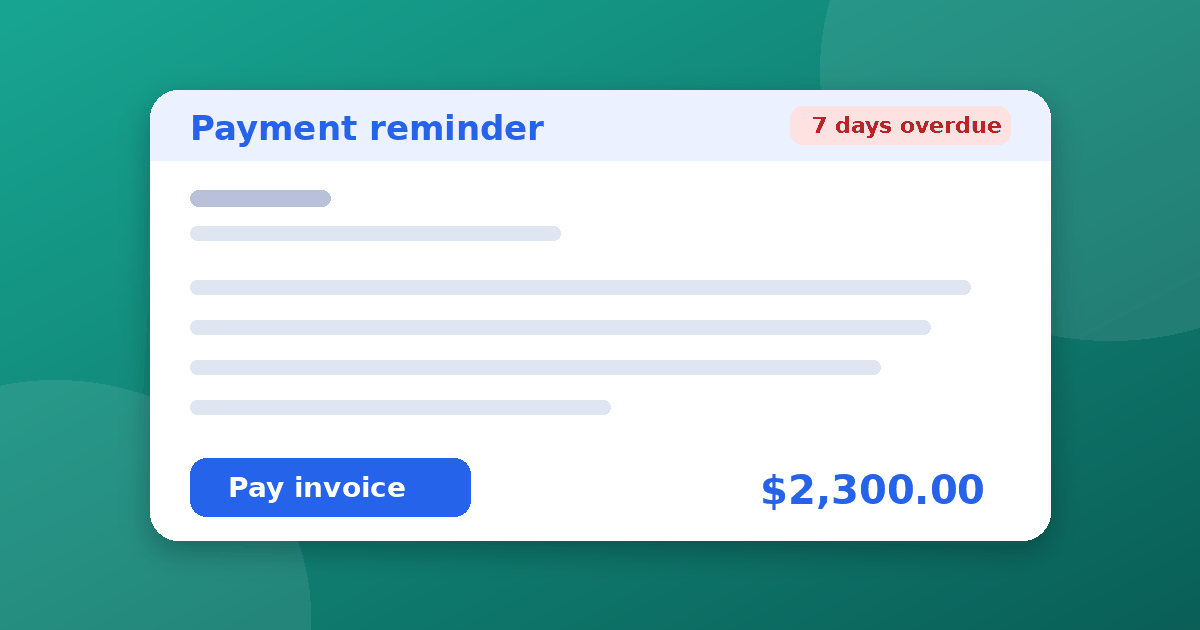
Subject: Overdue: invoice INV-2026-014 (7 days past due)

Hi [Name],

I have not yet received payment for invoice INV-2026-014 ($2,300.00),
which was due on October 31. Could you confirm that it is being
processed and let me know when I can expect payment?

If anything is missing on the invoice, such as a PO number or a
different billing contact, tell me and I will fix it right away.

Thank you,
[Your name]
Template 4: Final notice
Subject: Final notice: invoice INV-2026-014

Hi [Name],

This is a final reminder that invoice INV-2026-014 for $2,300.00 is
now [number] days overdue. Please arrange payment by [date].

As outlined in our agreement, [late fees will apply / work on
current projects will pause] if payment is not received by then.
I would much prefer to resolve this directly, so please reply today
if there is a problem.

Regards,
[Your name]
What every reminder should include
- The invoice number, amount, and original due date in the subject or first line
- A fresh copy of the invoice attached, so no one has to search for it
- Clear payment instructions or a direct payment link
- One specific request, such as confirming a payment date
- A direct contact for questions
Tone: polite, specific, and consistent
Stay factual. Avoid sarcasm, guilt trips, or phrases like "as I already told you." State the amount, the date, and the next step. Escalate in small steps, and if a message earlier in the chain went unanswered, try a phone call or a different contact, such as the accounts payable team.
Late fees and legal basics
Only charge late fees you agreed to in a contract, quote, or on the invoice itself. Rules on late fees and interest differ by country and region, so check your local guidance or ask an accountant before applying them. If a large invoice stays unpaid after several reminders, a formal demand letter or professional advice is the next step, not another email.
How to prevent late payments
- Send invoices promptly after the work is done
- Use a complete invoice with an exact due date. Our guide on how to write an invoice lists the fields that avoid delays
- Choose shorter payment terms for new clients
- Offer easy payment methods, like a link or bank transfer
- Ask for a deposit on large projects
- Use invoicing software that sends automatic reminders, and compare options with our checklist for evaluating SaaS tools
Frequently asked questions
How soon after the due date should I send a reminder? Sending a short note on the due date or the day after is common practice. Waiting a week or more makes it harder to follow up.
Should I call instead of emailing? Email creates a written record, so start there. A phone call helps when emails go unanswered or the amount is large.
What if the client says they never received the invoice? Resend it right away and confirm the right email address. Offer a short extension on the due date if it is reasonable, and note the new date in writing.
Can I stop work if an invoice is unpaid? Only if your agreement allows it. State this in your contract or terms before the project starts.
The takeaway
A good late payment reminder email is short, specific, and polite. Follow a simple schedule, attach the invoice every time, and escalate gradually. Pair these templates with clear invoices and sensible payment terms, and most overdue payments get resolved with one or two messages.